Frameworks
Why Frameworks Matter in IT, Building Peace of Mind Through Structure
In many organizations, IT grows quickly and often without a consistent structure. Systems get added as the business scales, security improves over time in response to new risks, and processes evolve based on immediate needs rather than long-term design. For a while, this works. The environment functions, problems get solved, and the business continues moving forward. But over time, complexity begins to build beneath the surface, and with it, hidden risk.
What starts as progress can quietly turn into fragmentation. Different systems operate in silos, security controls are applied inconsistently, and processes vary depending on who is handling them. There may be strong technical execution across the team, but without a unifying structure, it becomes difficult to measure effectiveness or understand overall risk. That’s when leadership starts asking the question that’s hard to answer clearly, are we actually secure, or are we just reacting?
This is one of the most common challenges we see. Teams are busy, tickets are getting closed, systems are being maintained, but there’s no consistent framework guiding decisions or prioritization. Without that structure, IT becomes reactive by default, responding to issues as they arise rather than operating with a clear, proactive strategy.
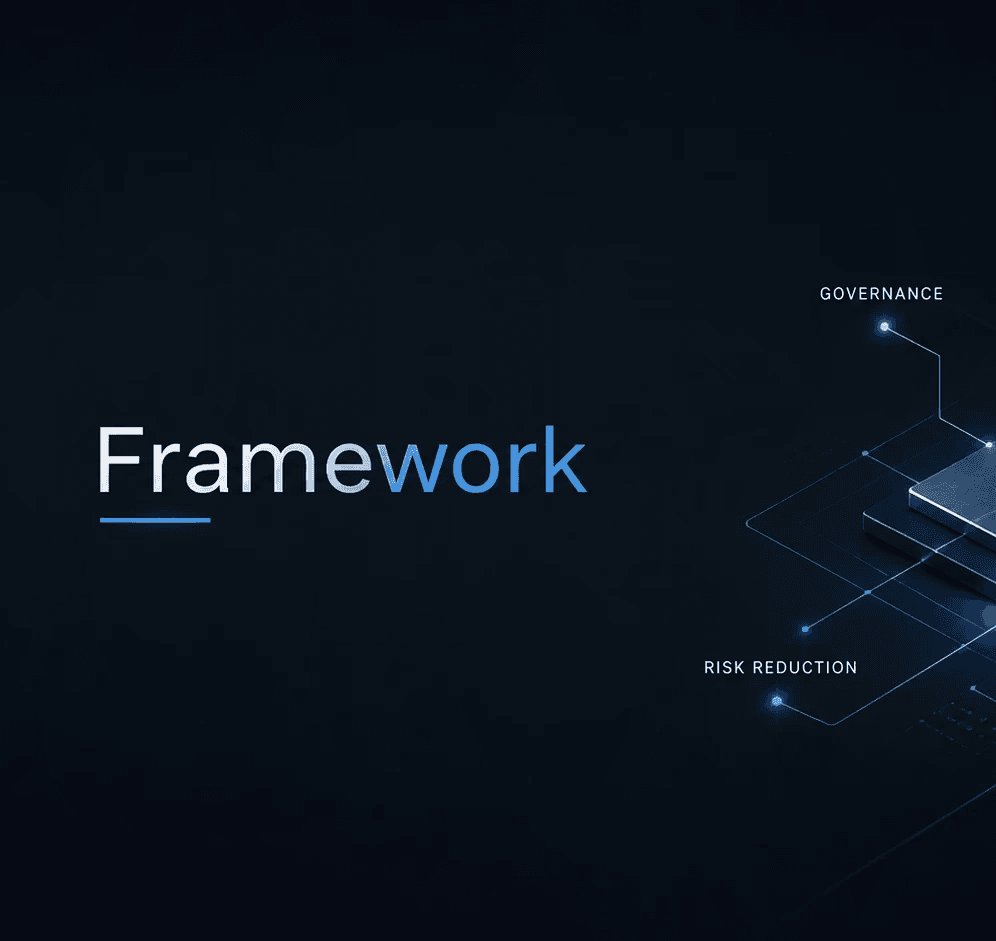
Frameworks like the National Institute of Standards and Technology Cybersecurity Framework introduce that missing layer of structure and clarity. They don’t replace the work your team is doing, they organize it. Instead of reacting to problems in isolation, organizations gain a way to step back and evaluate their environment as a whole.
With a framework in place, priorities become clearer. Teams can identify what truly matters to the business, focus on the risks that have the highest impact, and build consistent practices that apply across the entire environment. Security becomes more than a collection of tools and configurations, it becomes a coordinated effort with defined goals and measurable outcomes. Just as importantly, organizations are better prepared for incidents, with processes in place before something goes wrong.
The value of this shift shows up quickly. There is greater clarity around current risks and gaps, which removes a lot of the uncertainty that leadership often feels. Prioritization improves, with focus shifting away from low-impact tasks and toward meaningful improvements. Conversations between IT and leadership become more aligned, moving away from technical details and toward business risk and operational impact.
Audit readiness is another area where the difference is noticeable. Instead of scrambling to gather information or explain controls, organizations can approach reviews with confidence, knowing their environment is structured and documented. Stability also improves, as processes become less dependent on individual knowledge and more consistent across the team.
There’s also a practical reality that comes with adopting a framework. Even well-built environments will reveal gaps when viewed through a structured lens. Whether it’s limited visibility, inconsistent standards, or gaps in response processes, these findings are common. They’re not signs of failure, they’re signs of growth that happened without a consistent structure to guide it.
That perspective matters. Without a framework, those gaps can feel like problems. With a framework, they become opportunities, clear, actionable areas for improvement that can be prioritized and addressed over time.
Peace of mind in IT doesn’t come from adding more tools or reacting faster to issues. It comes from understanding what you have, where your risks exist, and how you’ll respond when something happens. It comes from having a system that brings consistency, visibility, and alignment across the organization.
Frameworks provide that clarity. They turn scattered efforts into a cohesive strategy and shift IT from reactive support into a true strategic advantage.
We’re always available to provide direction when it matters.